Astrophotography

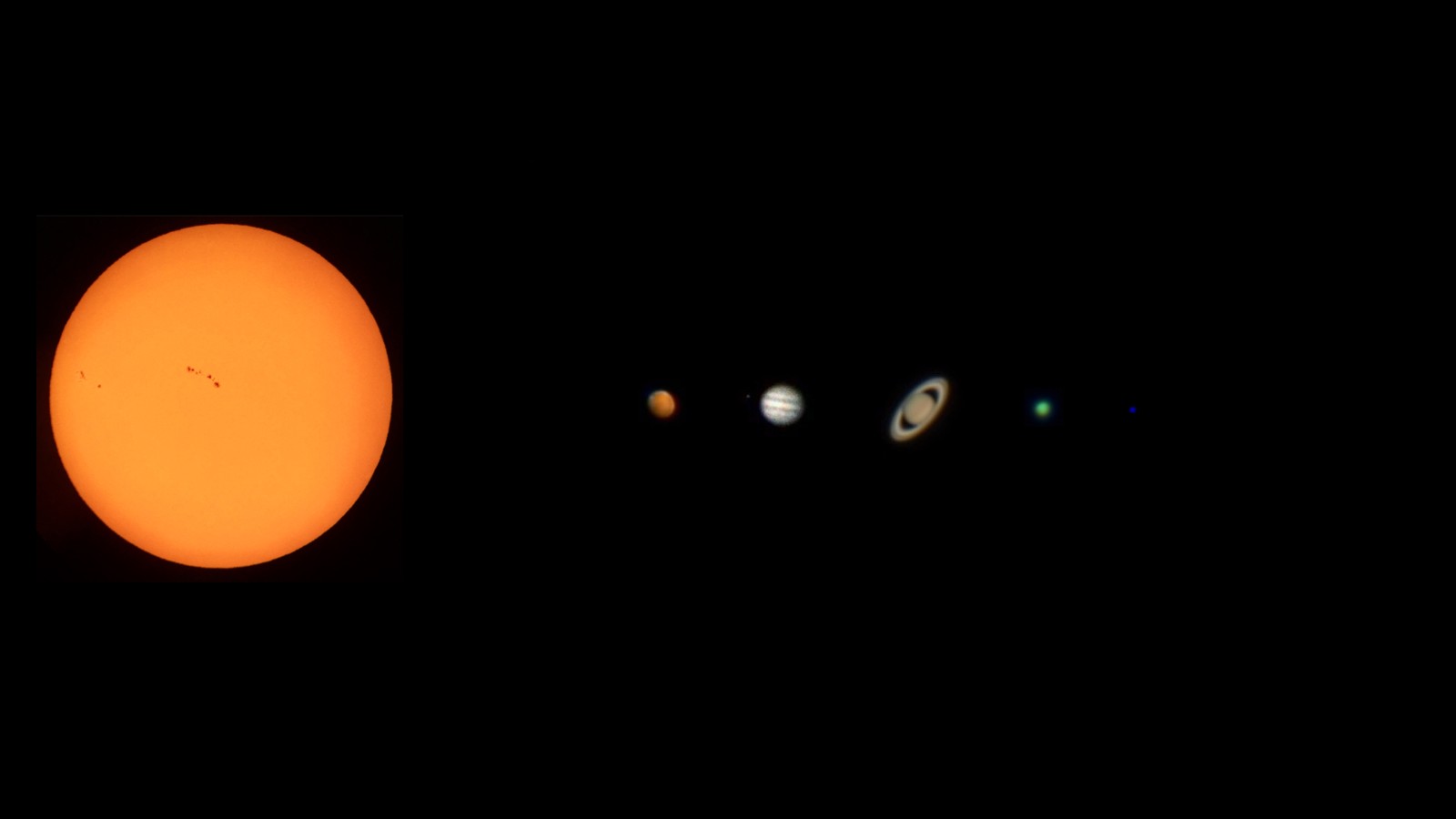
Amateur astrophotography from roughly 2014 to 2020, running outward from the planets next door to the Andromeda Galaxy two and a half million light-years away.

Equipment & technique

Most of these were shot with a Canon EOS Rebel T3i riding on whatever telescope I could get time on, from a backyard 12-inch Dobsonian up to the long historic refractor at Cornell's Fuertes Observatory, which shows up in these notes as "Irv". The deep-sky objects are usually stacks of long exposures; the planets are lucky imaging, the sharpest few percent of tens of thousands of video frames combined into one. The notes are my own from the time, lightly tidied.

Astrophotographs
Planets
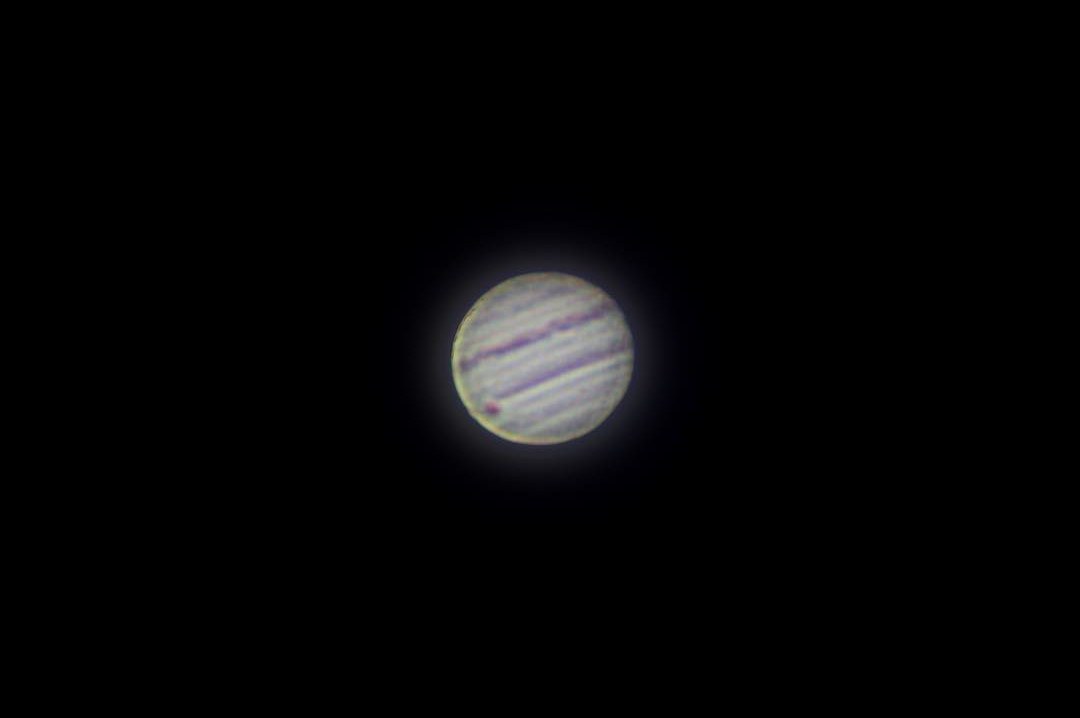
Jupiter with cloud bands and the shadow of Io transiting the disc
Jupiter, with the Great Red Spot visible, and the banding of its storms drawn out. The sharpest 5% of 30,000 video frames, stacked. Canon T3i + 2× Barlow on the Irving Porter Church Memorial Telescope, Fuertes Observatory · 2018
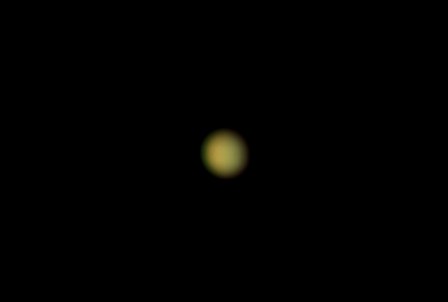
Venus as a bright featureless disc
Venus, a brilliant featureless disc. Like the Moon it runs through phases; this was my first one of reasonable quality, from eighteen thousand stacked frames. T3i + 2× Barlow on "Irv" · 2018
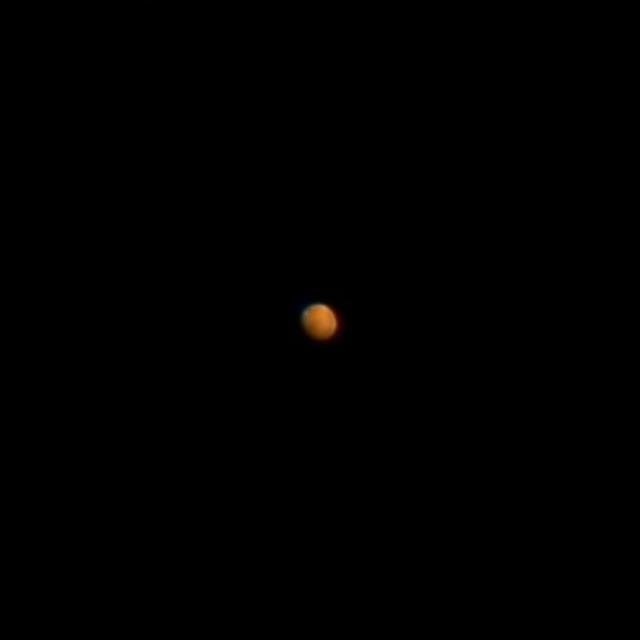
Mars showing a polar ice cap and dark surface markings
Mars, with a bright polar ice cap at one edge and dark albedo markings across the disc. My first image of Mars at any reasonable quality. Canon T3i through an Orion XT12i (12-inch Dobsonian) · 2016
Comets
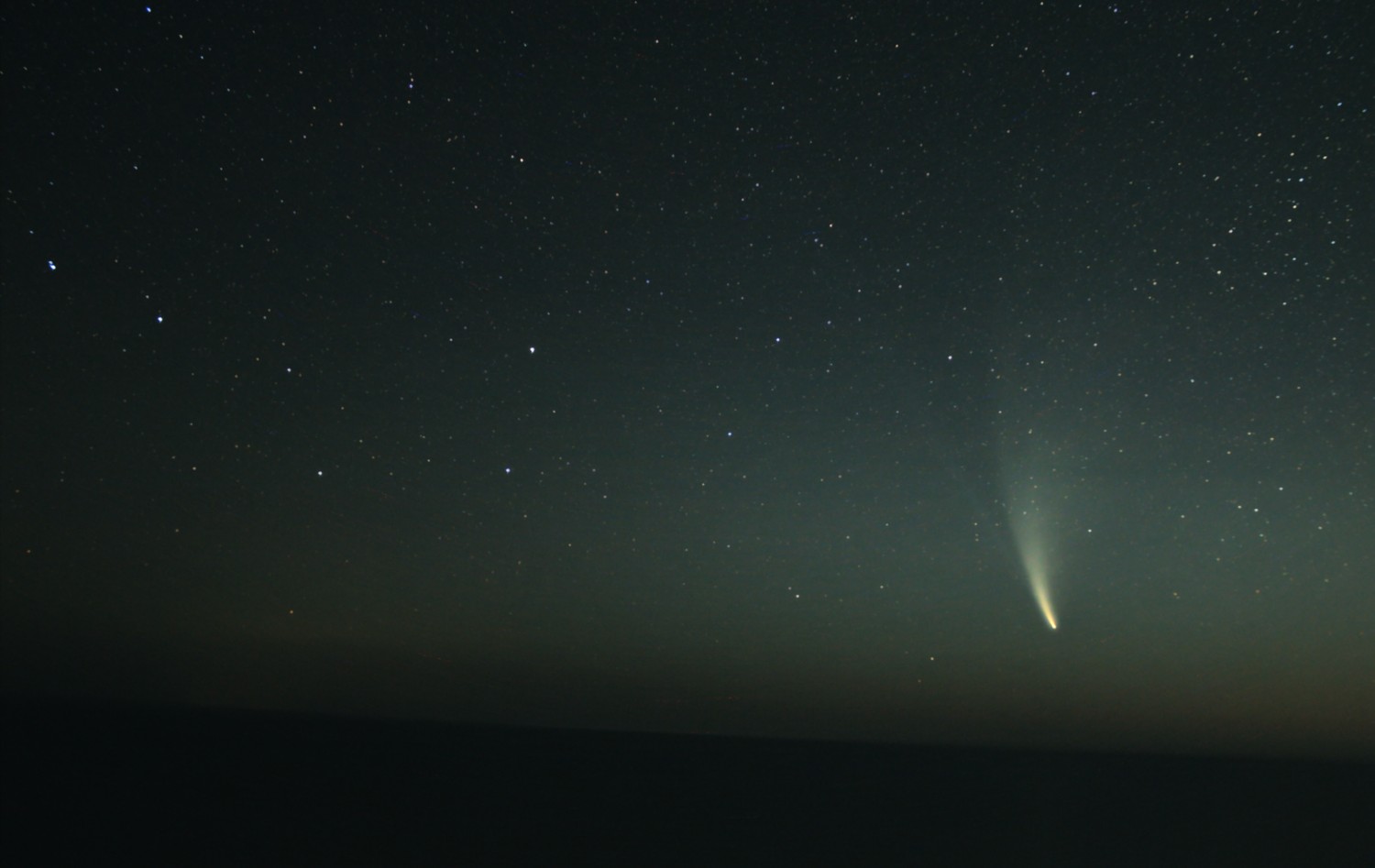
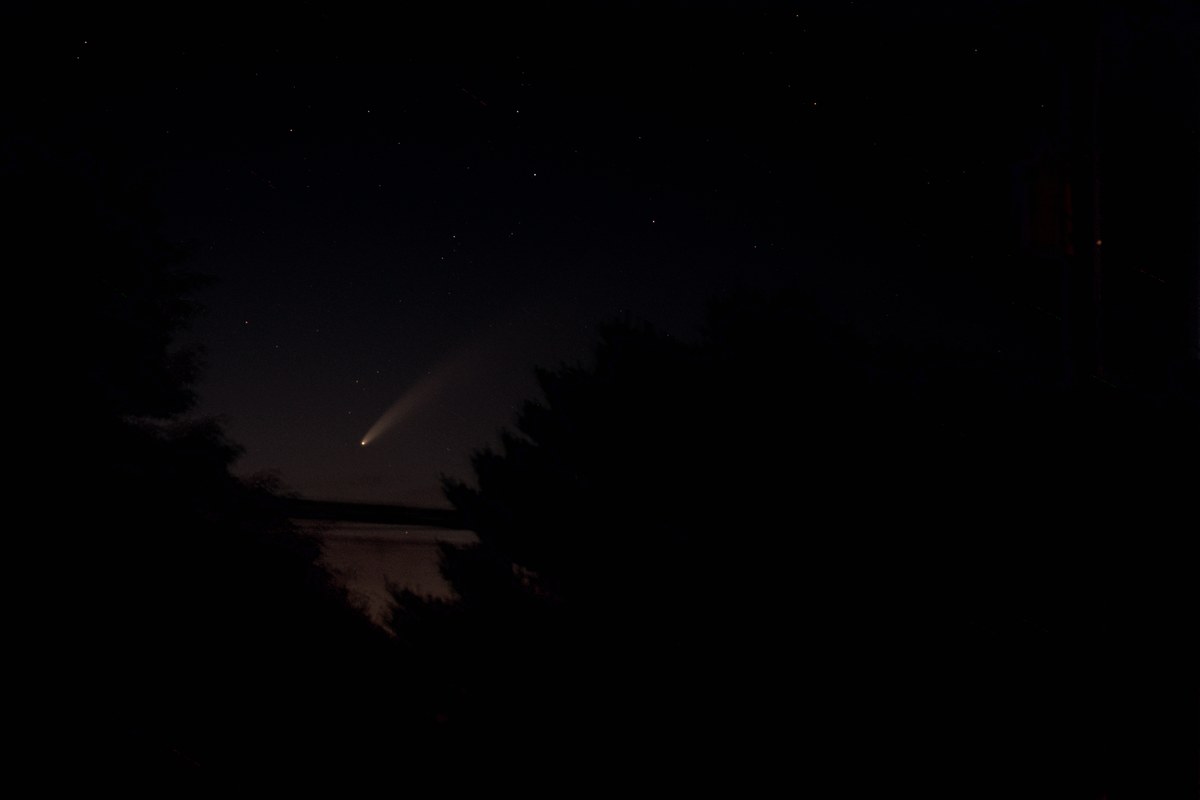
Comet NEOWISE with its dust tail
Comet C/2020 F3 (NEOWISE), the brightest comet visible from the northern hemisphere in a generation, its dust tail sweeping back from the coma. It will not return for about 6,800 years. 2020
Nebulae
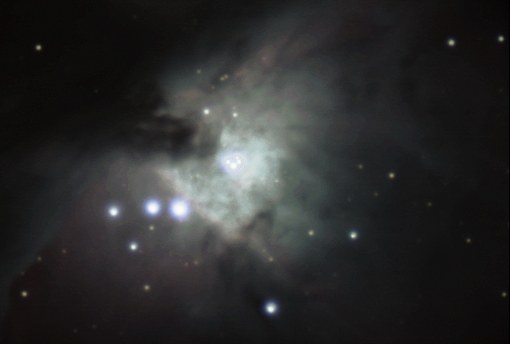
The Orion Nebula, M42
The Orion Nebula, a stellar nursery 1,300 light-years off. My first try at high-dynamic-range compositing, which the nebula forces on you: the brightness runs over an enormous range from the searing Trapezium core to the faint outer wings, too much for any single exposure. 10 frames each at 1, 5, 10 and 30 s through "Irv" with a 2× Barlow · 2018
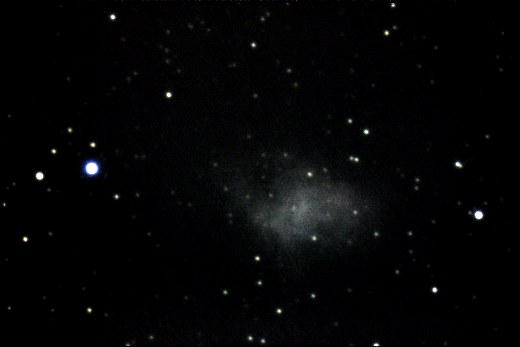
The Crab Nebula, M1
The Crab Nebula, the still-expanding wreckage of a supernova that Chinese astronomers recorded in 1054. I shot it on a whim and the stacking pulled out far more than the raw frames promised: the central pulsar is plainly there, wrapped in the glow of its plerion. 25 × 30 s at ISO 6400, T3i + 2× Barlow on "Irv"; 11 of 22 frames stacked · 2018
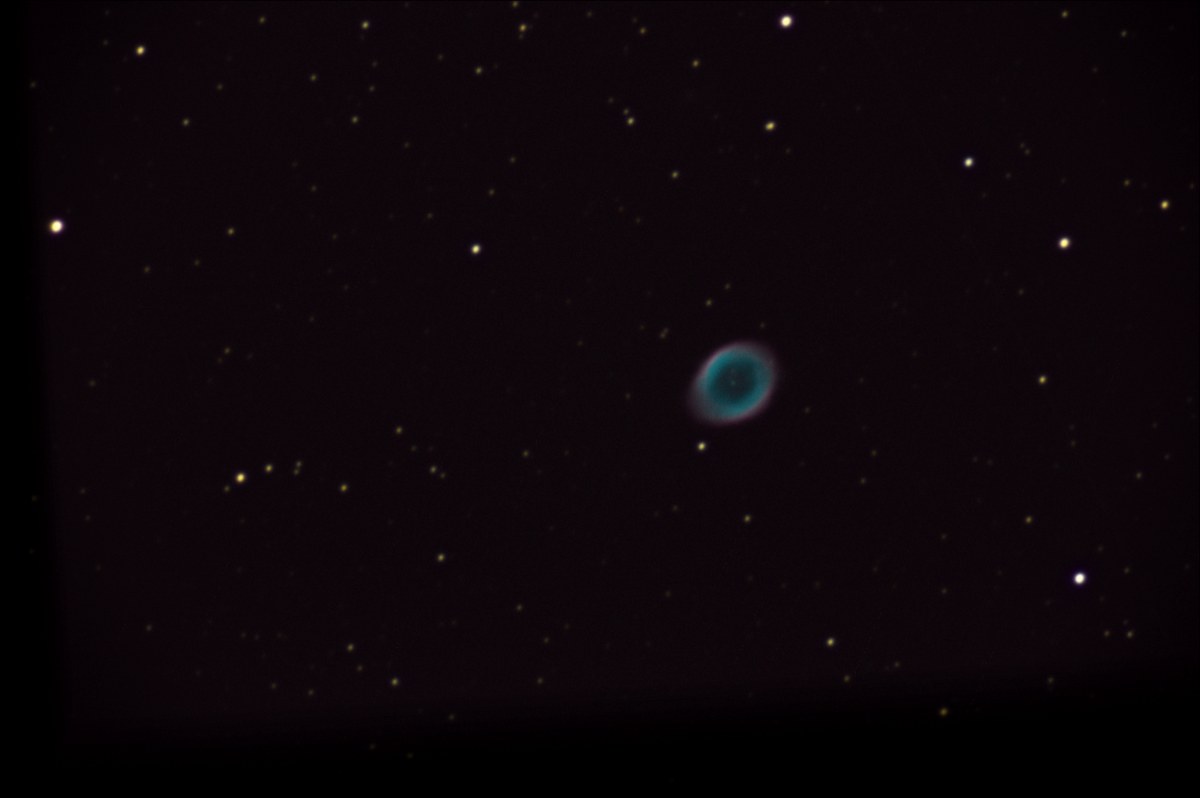
The Ring Nebula, M57
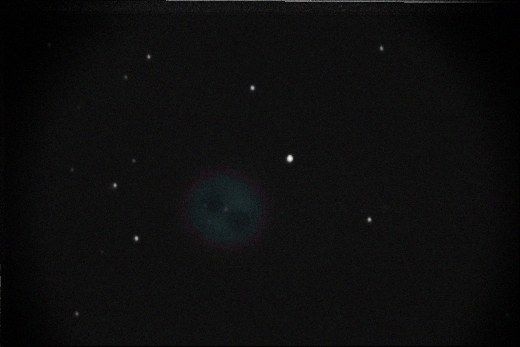
The Ring Nebula in Lyra, a shell of gas puffed off by a dying sun-like star and lit from within. 2020
Open star clusters
The Pleiades, M45
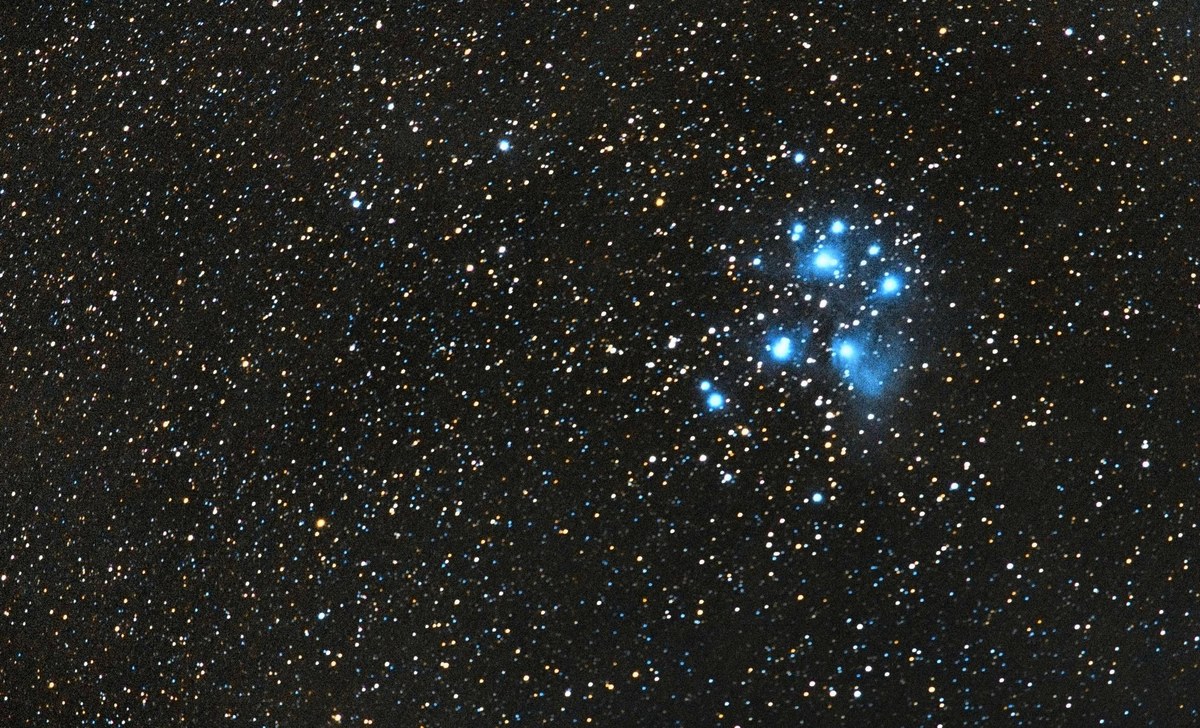
The Pleiades: young, hot, blue stars still tangled in the faint reflection nebulosity they were born from. One of the first astrophotos I was ever proud of, and the first time I thought maybe I could actually do this. Single-shot exposure, tripod-mounted untracked T3i · 2015
Galaxies
The Whirlpool Galaxy, M51
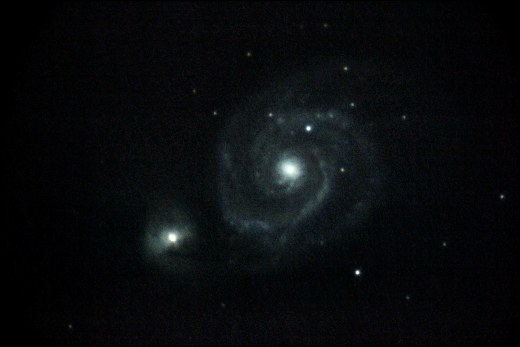
The Whirlpool Galaxy and its small companion, caught mid-collision. This one was stacked by hand in GIMP after DeepSkyStacker flatly refused to combine more than five frames, a method a stranger on the internet was kind enough to walk me through. 2018
Bode's Galaxy, M81
Bode's Galaxy, a grand-design spiral in Ursa Major. 2020
The Cigar Galaxy, M82
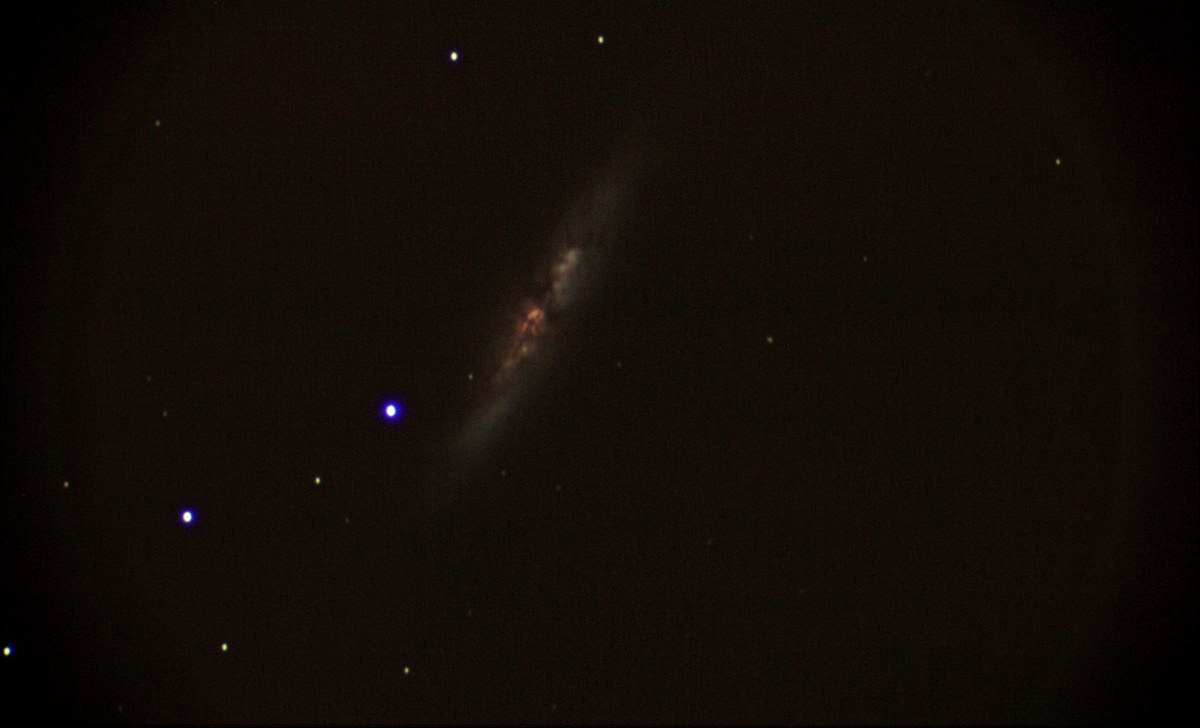
The Cigar Galaxy, M81's neighbor, seen edge-on and lit up red down its middle: a starburst set off by the gravitational pull of its larger companion. 2020
The Needle Galaxy, C38
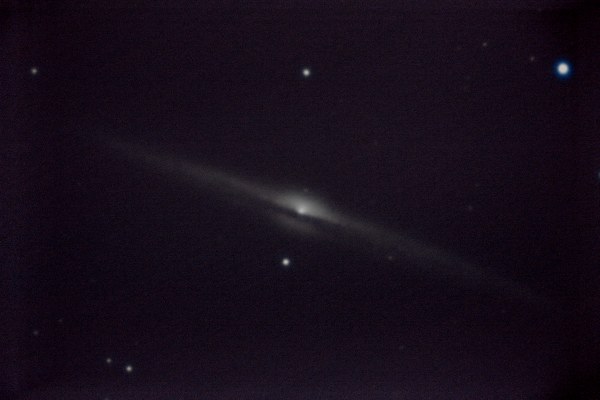
The Needle Galaxy, a spiral turned so perfectly edge-on that it thins to a sliver of light with a dark dust lane down its spine. 2020
The Andromeda Galaxy, M31
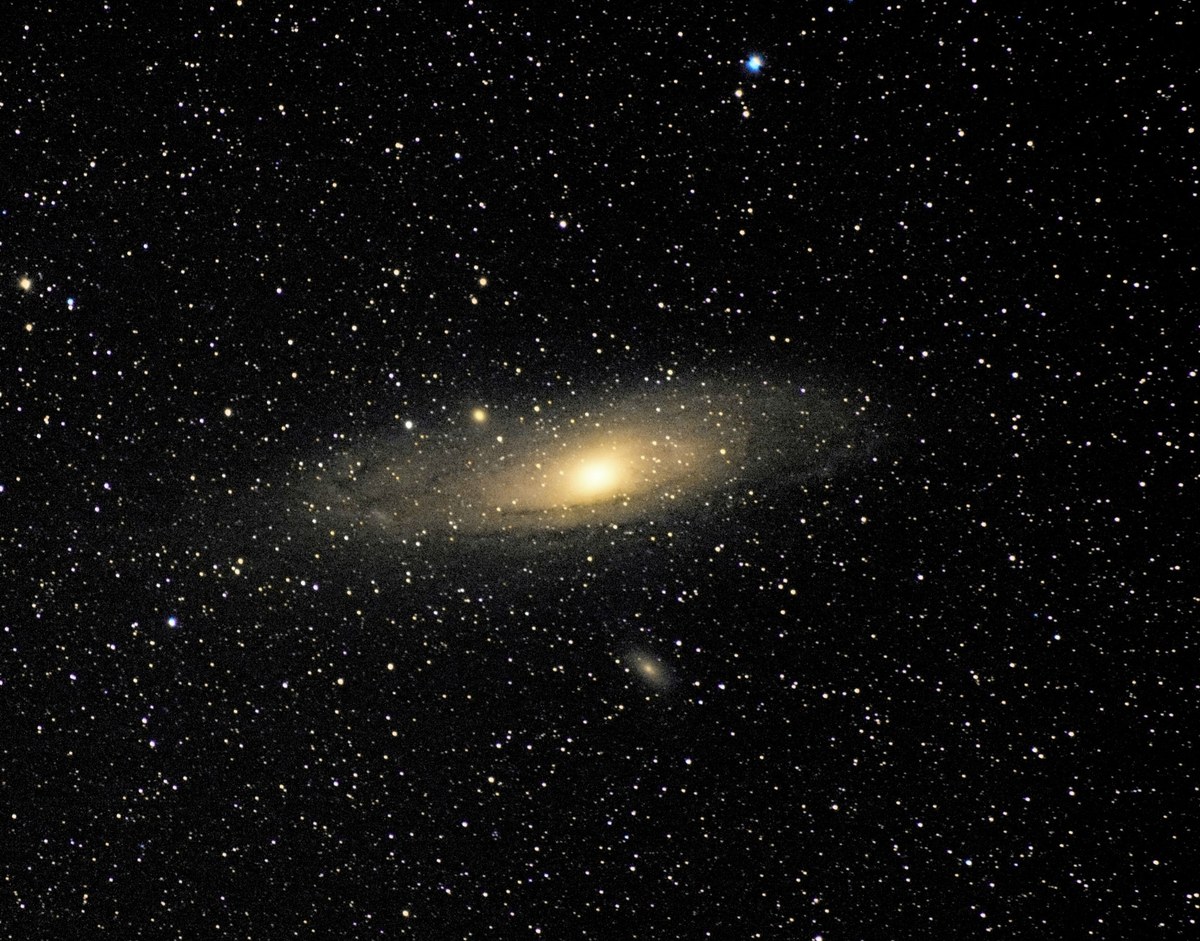
The Andromeda Galaxy, the nearest large galaxy to ours and the most distant thing a human eye can see unaided, two and a half million light-years away. This was my favorite photograph for years; a print of it hung in my grandmother's living room. ISO 3200, f/5.6, 25 × 30 s with darks, flats and biases, T3i at 250 mm · 2015